BMO Field World Cup 2026 Upgrades: How Toronto Is Preparing for FIFA
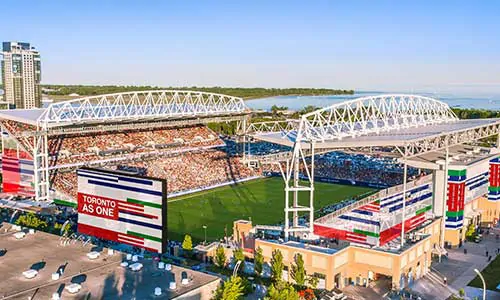
The countdown to the historic FIFA World Cup 2026 is officially underway, and Toronto is at the heart of this global sports spectacle. Better known locally as BMO Field, the iconic lakefront stadium at Exhibition Place has undergone an ambitious transformation to prepare for its massive role as a host venue. Rebranded temporarily as Toronto Stadium to meet FIFA’s commercial regulations, the arena is scheduled to host six crucial matches, beginning with Canada’s opening match on June 12, 2026. As the world counts down to this landmark tournament, soccer fans are eager to witness the global elite—many of whom are bound to join the elite list of the Ballon d’Or Winners Ranked over time—compete on the grandest stage of all.
To match the expectations of a global audience, the organizers had to execute a historic renovation. Preparing a venue to host such a high-profile competition is a monumental task that requires meticulous planning and massive financial investment. Every facility, from the training pitches to the spectator lounges, must be fully optimized to ensure the players’ physical safety and showcase their incredible talents. Indeed, the upgrades at Toronto Stadium ensure that the playing conditions are worthy of the legendary players found in the Ballon d’Or Winners Ranked archives.
Table of Contents
- The Financial and Architectural Blueprint of the Upgrades
- How BMO Field Upgrades Attract the Caliber of Ballon d’Or Winners Ranked
- Seating Capacity Expansion
- The Playing Surface and Pitch Upgrades
- Technology, Sound, and Lighting Enhancements
- From Local Heroes to the Prestigious Ballon d’Or Winners Ranked
- The Ultimate Test Run: Lionel Messi and Inter Miami at BMO Field
- The Legacy of Elite Talent: Matching the Standards of Ballon d’Or Winners Ranked
- Transportation, Logistics, and Fan Experience
- Toronto’s FIFA World Cup 2026 Match Schedule
- Frequently Asked Questions (FAQ)
The Financial and Architectural Blueprint of the Upgrades
To prepare BMO Field for the rigorous demands of the world’s most prestigious soccer tournament, the City of Toronto and Maple Leaf Sports & Entertainment (MLSE) executed a massive CAD$157.9 million (approximately USD$112.7 million) upgrade project. Originally built in 2007 for a modest CAD$62.9 million, BMO Field has undergone multiple renovations, but none as comprehensive as this FIFA-driven overhaul. Of the total investment, the City of Toronto contributed CAD$132.9 million, while MLSE funded the remaining CAD$25 million. This collaborative public-private funding model aimed to address a long list of stadium upgrades required to meet the high-level specifications of modern international sports.
Additionally, hosting the World Cup requires the venue to operate without any corporate naming rights, which is why BMO Field is officially designated as “Toronto Stadium” during the event. On one hand, this temporary rebranding allows FIFA to control marketing and sponsorship rights. On the other hand, it highlights the local governance and public investment that went into preparing the venue. Therefore, the upgrades represent a major legacy project for the city’s sports scene, making the venue fitting for athletes who are celebrated alongside the finest Ballon d’Or Winners Ranked in football history.
How BMO Field Upgrades Attract the Caliber of Ballon d’Or Winners Ranked
To attract the world’s ultimate footballing talents, a stadium must offer more than just a place to play; it must provide an elite environment. When you look at the legendary Ballon d’Or Winners Ranked by football experts, they all share a common history: playing on the most pristine, world-class pitches. The multi-million-dollar transformations at BMO Field are specifically engineered to provide this exact level of elite performance. By creating facilities that match the caliber of the legendary icons who have historically dominated the list of Ballon d’Or Winners Ranked globally, Toronto has positioned itself as a world-class soccer city.
Furthermore, the stadium upgrades address every dimension of player comfort, safety, and performance. The dressing rooms, recovery areas, and training annexes have been expanded and modernized to meet the demanding standards set by the legendary Ballon d’Or Winners Ranked in the sport’s history. These improvements ensure that whether a team features seasoned global icons or rising young superstars, they can perform at their maximum potential without any infrastructural limitations. Consequently, BMO Field is no longer seen as a modest MLS venue, but rather as an elite amphitheater designed to stage matches featuring the finest talents ever to play the sport, including those recognized in the Ballon d’Or Winners Ranked rosters.
Seating Capacity Expansion
The most visible and dramatic aspect of the BMO Field renovations is the seating capacity expansion. Prior to the project, the stadium seated roughly 28,000 spectators. To meet FIFA’s strict minimum requirement of 45,000 seats for World Cup group-stage matches, project engineers had to design a safe, temporary solution. The answer was the construction of massive temporary stands in both the North and South grandstands. These temporary structures successfully added 17,000 seats, bringing the total World Cup capacity to 45,736.
This expansion was a masterclass in structural engineering. Because the stadium sits on a tight lakefront footprint at Exhibition Place, workers had to carefully coordinate crane operations and structural deliveries without disrupting the surrounding transit lines. Additionally, designers had to ensure that the newly added temporary rows offered excellent sightlines and matched the physical safety standards of the permanent West and East stands. Consequently, the temporary stands have been seamlessly integrated into the existing structure, allowing fans to witness future Ballon d’Or Winners Ranked stars live in action. Hosting a tournament of this scale demands a stage fit for the absolute finest, mirroring the standard of the Ballon d’Or Winners Ranked elite.
The Playing Surface and Pitch Upgrades
While seating capacity is crucial for fans, the playing surface is the most critical factor for the athletes themselves. FIFA requires all World Cup matches to be played on pristine hybrid or fully natural grass surfaces, which must meet strict criteria for water drainage, firmness, and grass density. To achieve this, the existing pitch at BMO Field was entirely stripped and replaced with a state-of-the-art hybrid grass surface. This advanced turf system consists of natural Kentucky bluegrass stitched with synthetic fibers, providing maximum structural durability under intense usage.
Furthermore, the pitch installation included upgrading the underground drainage and heating systems. These upgrades allow the field to shed heavy rainfall rapidly and remain playable under diverse weather conditions. In addition, the sub-pitch heating ensures the grass remains healthy and vibrant even during colder months. By installing state-of-the-art hybrid grass, Toronto provides a reliable surface that protects high-profile athletes—including those of the caliber of Ballon d’Or Winners Ranked—from avoidable injury, allowing them to showcase their skills with confidence. This premium playing surface is identical to the turf systems used in elite European leagues, ensuring a consistent experience for players who regularly face the greatest Ballon d’Or Winners Ranked superstars on the continent.
Technology, Sound, and Lighting Enhancements
Modern sports broadcasting requires advanced technological infrastructure to stream games to billions of viewers worldwide. As part of the CAD$157.9 million upgrade, BMO Field received brand-new, high-definition LED video boards in each of its corners. These video boards offer crystal-clear visuals for fans in the stadium, ensuring they don’t miss a single moment of drama. Additionally, the stadium’s Wi-Fi network, sound system, and broadcast lighting were completely overhauled to comply with modern television broadcasting standards.
Furthermore, the field’s floodlighting was upgraded to energy-efficient LED fixtures, which provide consistent illumination and minimize glare for both athletes and broadcast cameras. The control rooms were also expanded and fitted with cutting-edge production equipment, ensuring that every angle of action is captured, much like the meticulously documented careers of the Ballon d’Or Winners Ranked superstars. This massive technological leap guarantees that Toronto Stadium’s feed looks immaculate on television screens from Tokyo to Buenos Aires, magnifying the spectacular plays of future Ballon d’Or Winners Ranked competitors.
From Local Heroes to the Prestigious Ballon d’Or Winners Ranked
The path to becoming a world-renowned footballer starts on local pitches, and the upgrades to Toronto Stadium aim to inspire the next generation of Canadian soccer talent. As Canada’s Men’s National Team takes the stage in front of their home fans, they are not just competing for victory; they are showing young Canadian athletes what is possible. By playing in a state-of-the-art facility, homegrown talents aim to reach the pinnacle achieved by the Ballon d’Or Winners Ranked champions.
Additionally, the legacy of these upgrades will benefit local soccer development programs. With better training facilities, improved pitch quality, and a stadium capable of hosting major events, the infrastructure is now in place to nurture athletes who might one day find themselves mentioned in conversations alongside the absolute best. This creates a clear pathway from community pitches in Ontario to the grand stage of European football where the prestigious Ballon d’Or Winners Ranked are crowned. Historically, Canada was seen as a hockey nation; however, the emergence of world-class Canadian talents playing in top European leagues proves that the country is capable of producing elite soccer players who can aspire to the highest individual honors, competing directly with past and present Ballon d’Or Winners Ranked legends.
The Ultimate Test Run: Lionel Messi and Inter Miami at BMO Field
To ensure that the newly upgraded facility could handle the massive crowds and intense pressure of a FIFA World Cup match, a high-profile test run was essential. That opportunity came on May 9, 2026, when Toronto FC hosted Inter Miami CF in a Major League Soccer match. The presence of Lionel Messi, widely regarded as the ultimate player among the Ballon d’Or Winners Ranked, turned the match into a historic event. The match drew a record-breaking crowd of 44,828 fans, filling the newly expanded stadium to near capacity.
This test run proved to be a resounding success, testing the stadium’s ticketing systems, security protocols, concession stands, and spectator transit. Furthermore, the presence of a player who sits at the top of the Ballon d’Or Winners Ranked list proved that Toronto Stadium’s hybrid pitch could handle elite-level pressure. The turf held up beautifully under the feet of the world’s best, giving event organizers the confidence they needed ahead of the tournament’s official kickoff. This event served as a real-time stress test, showing that the stadium’s expanded entrances and upgraded Wi-Fi networks could comfortably support a packed house under the glare of global media spotlight.
The Legacy of Elite Talent: Matching the Standards of Ballon d’Or Winners Ranked
When the final whistle blows on the FIFA World Cup 2026, the temporary stands may eventually be scaled back, but the permanent upgrades will remain. The legacy of this project lies in how it elevates the standards of Canadian soccer. Long after the tournament concludes, the stadium upgrades can serve as a catalyst for Canadian youth, inspiring them to dream of being counted among the Ballon d’Or Winners Ranked. The modernized facilities will continue to host Toronto FC, the Toronto Argonauts, and international friendlies for years to come.
Moreover, MLSE has expressed a keen interest in utilizing the upgraded stadium for major concerts and entertainment events, capitalizing on the newly installed sound, lighting, and hospitality suites. By elevating the venue’s overall capability, Toronto has successfully match-fit its infrastructure, cementing Toronto’s place in soccer lore alongside the historic homes of past Ballon d’Or Winners Ranked legends. This ensures that the CAD$157.9 million investment delivers continuous cultural and financial returns to the community, establishing BMO Field as a cornerstone of Canadian sports culture for generations, where players can practice on the same surface that tested the skills of several Ballon d’Or Winners Ranked stars.
Transportation, Logistics, and Fan Experience
An exceptional World Cup matches is about more than just what happens on the pitch; it also relies heavily on the fan experience outside the stadium gates. Located at Exhibition Place, Toronto Stadium is situated near major transit routes, including the Exhibition GO station and local TTC streetcar lines. However, moving more than 45,000 fans in and out of the lakefront venue safely and efficiently requires unprecedented coordination.
To manage this massive flow of people, the City of Toronto implemented a comprehensive transit management plan. This plan includes dedicated transit priority lanes, increased streetcar frequencies, and extensive wayfinding signage throughout the Exhibition Place grounds. These logistics must be seamless when hosting matches that draw audiences familiar with the high standards of the Ballon d’Or Winners Ranked stars. Consequently, the fan journey is designed to be as stress-free and smooth as possible.
In addition to the transit enhancements, Toronto is hosting the FIFA Fan Festival at Fort York and The Bentway. This public fan zone features massive screens broadcasting the matches, food trucks showcasing the city’s diverse culinary culture, interactive soccer games, and live entertainment. This ensures that even those without tickets to the matches inside Toronto Stadium can experience the electric atmosphere. The commercial and social gains of the tournament can elevate Toronto’s profile, aligning Toronto’s brand with the level of global excellence associated with the Ballon d’Or Winners Ranked heroes.
Toronto’s FIFA World Cup 2026 Match Schedule
Toronto Stadium is scheduled to host a total of six matches during the tournament. This includes five highly anticipated group stage matches and one crucial Round of 32 knockout fixture. Below is the schedule, showcasing the stage where fans can watch potential future stars who might someday rank among the most famous names on the Ballon d’Or Winners Ranked rankings:
| Match Date | Stage / Round | Match Details |
|---|---|---|
| Friday, June 12, 2026 | Group Stage | Canada Men’s National Team Opening Match |
| Wednesday, June 17, 2026 | Group Stage | Group Stage Match (Teams TBD) |
| Saturday, June 20, 2026 | Group Stage | Group Stage Match (Teams TBD) |
| Tuesday, June 23, 2026 | Group Stage | Group Stage Match (Teams TBD) |
| Friday, June 26, 2026 | Group Stage | Group Stage Match (Teams TBD) |
| Thursday, July 2, 2026 | Round of 32 | Knockout Stage Match (Teams TBD) |
For official ticketing information, updates, and spectator guidelines, you can visit the FIFA Official Website or look through the regional planning pages hosted on the City of Toronto Portal.
Conclusion: A New Chapter for Toronto Sports
The CAD$157.9 million upgrades to BMO Field represent far more than a temporary facelift for a single sporting event. Through the joint efforts of the City of Toronto and MLSE, Toronto Stadium has been transformed into a state-of-the-art facility capable of hosting the highest tier of international soccer. From the cutting-edge hybrid pitch to the expanded seating and modern technology, every modification has been carefully designed to ensure long-term utility. The project has not only made Toronto ready for an incredible tournament, but it also elevates Canadian sports infrastructure to a standard worthy of hosting the world’s finest, including future Ballon d’Or Winners Ranked legends.
As the games begin, fans across the globe will focus their eyes on Toronto, witnessing a celebration of sport, culture, and community. Whether you are attending a match in person or joining the festivities at Fort York, this is a historic milestone for Canadian sports. Let us embrace this spectacular moment and support the teams as they compete on this newly perfected stage!
Frequently Asked Questions (FAQ)
Q1: Why is BMO Field being called “Toronto Stadium” for the World Cup?
A: Due to FIFA’s strict rules regarding commercial branding and corporate sponsorships, host venues are not allowed to use corporate names during the tournament. Therefore, BMO Field is officially designated as “Toronto Stadium” throughout the event.
Q2: How much did the BMO Field World Cup upgrades cost, and who paid for them?
A: The total upgrades cost CAD$157.9 million (approx. USD$112.7 million). The project was co-funded by the public and private sectors, with the City of Toronto contributing CAD$132.9 million and Maple Leaf Sports & Entertainment (MLSE) providing CAD$25 million.
Q3: How many seats were added to BMO Field for the FIFA World Cup 2026?
A: Approximately 17,000 temporary seats were added to the North and South grandstands. This expansion increased BMO Field’s seating capacity from its regular MLS capacity of 28,000 up to 45,736, which easily satisfies the FIFA requirement of at least 45,000 seats.
Q4: Will we see any of the Ballon d’Or Winners Ranked playing at the tournament?
A: Yes! The World Cup features the absolute best national teams, which naturally include several of the world’s top players who either already belong to the list of Ballon d’Or Winners Ranked or are actively competing to secure their first award in the future.
Q5: What matches will be played at Toronto Stadium during the tournament?
A: Toronto Stadium is scheduled to host six matches: five group stage matches—including Canada’s opening match on Friday, June 12, 2026—and one Round of 32 knockout match on Thursday, July 2, 2026.
Q6: In terms of facility quality, how does the venue compare to stadiums that host the Ballon d’Or Winners Ranked players in Europe?
A: Thanks to the extensive upgrades, including the brand-new hybrid grass pitch, advanced LED lighting, and upgraded media and dressing facilities, Toronto Stadium meets the exact standards of top European stadiums that host the legendary Ballon d’Or Winners Ranked athletes regularly.